
Ingredients
- 1 whole packer brisket (12–16 lbs, Prime or Choice grade)
- Salt
- Coarse black pepper (16-mesh ideal)
- Optional: garlic powder, onion powder, paprika for rub variation
- Wood chunks/chips (hickory, oak, or post oak for Texas-style; soak chips if using)
- Hot water (for the pans)
- Optional for wrap: beef broth, tallow, or butter
- Heavy-duty aluminum foil or pink butcher paper
Equipment
- Barrel smoker or Kettle grill (22″ or similar)
- Charcoal briquettes (Kingsford or similar)
- 2 small aluminum foil pans
- Instant-read thermometer (Thermapen or similar)
- Heavy-duty foil
- Cooler + towels for resting
Instructions
- Prep the Brisket (day before or morning of)
- Trim excess hard fat, aim for ¼-inch fat cap. Square up edges if desired.
- Apply simple rub: 50/50 salt and coarse black pepper (about ½ cup total for a 14-lb brisket). Coat generously on all sides.
- Rest uncovered in fridge 4–12 hours (overnight ideal) for better bark formation.
- Set Up the Snake Method
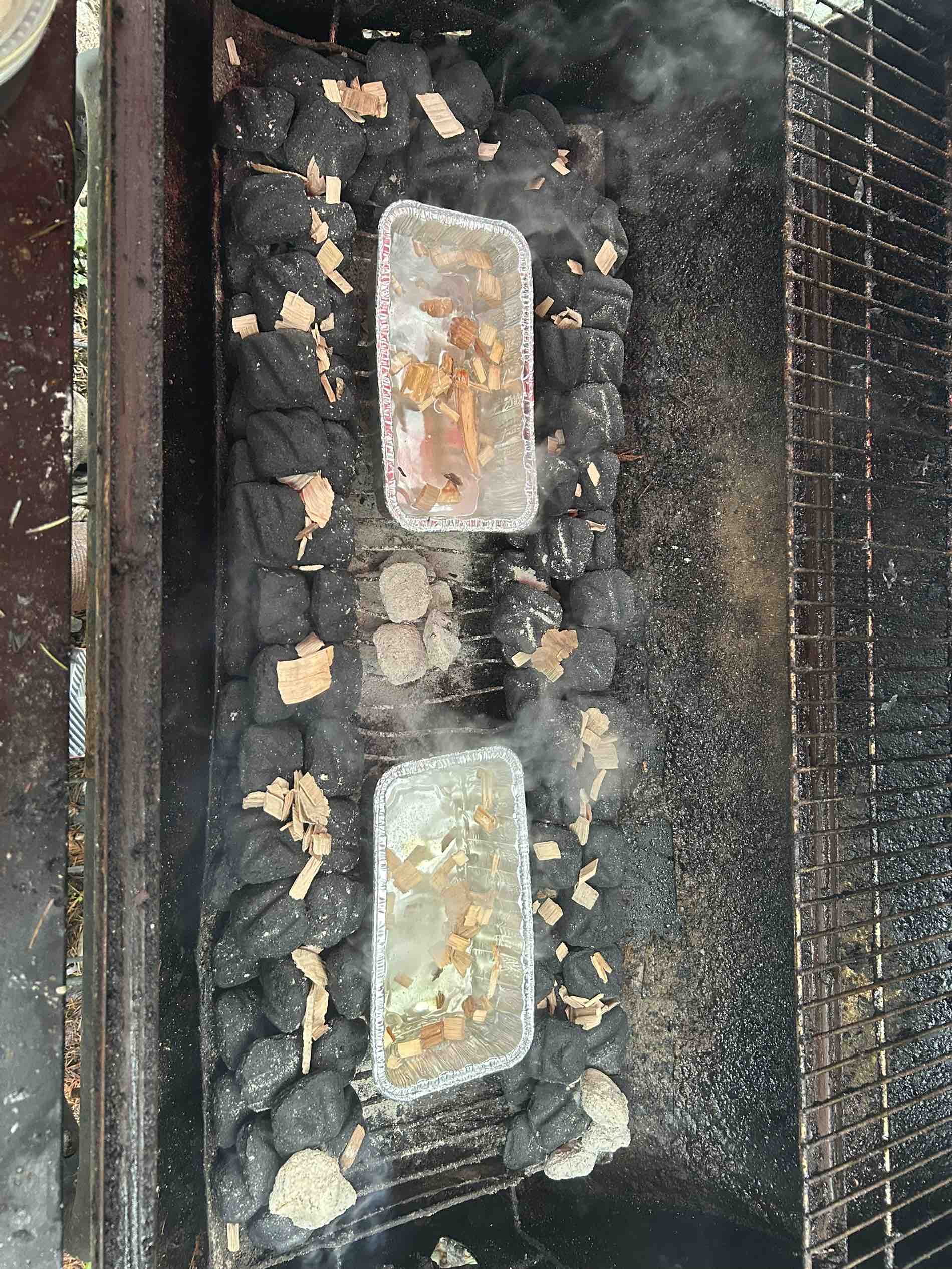
- Arrange briquettes in a semi-circle (snake) 2 briquettes wide and 2 high along half the perimeter of the grill.
- Place a few wood chunks on top of the briquettes along the snake.
- Fill 2 small aluminum pans with soaked wood chips/chunks (or dry chunks) and add hot water to one or both pans for extra humidity and temperature stability.
- Place the pans directly in between the briquettes near the start and middle of the snake for steady smoke.
- On a barrel smoker you might want to light both ends (left and right) to heat the long space evenly.
- Light 8–10 briquettes in a chimney. Once fully lit, place them at one end of the snake to start the slow burn.
- Start the Cook
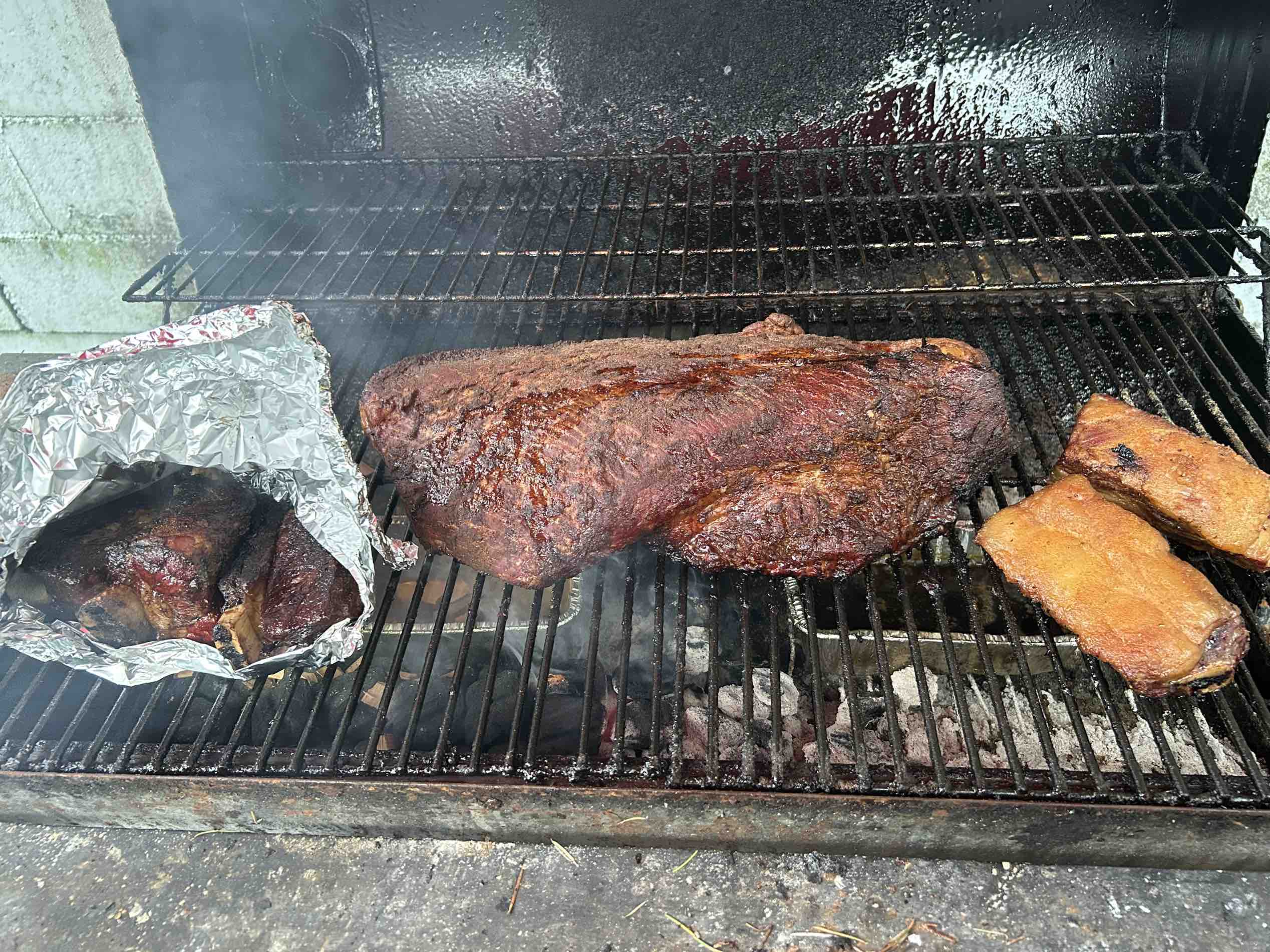
- Place brisket on the grate fat side up or down (both work; fat up renders into meat, fat down shields from heat).
- Position it in the center, away from the snake.
- Close lid, adjust vents to hold 225–250°F (bottom vent ¼–½ open, top vent half open).
- No need to flip or rotate unless one side gets noticeably hotter.
- Smoke Unwrapped (Bark Building Phase)
- Cook unwrapped for first 5–7 hours or until bark is deep mahogany and internal temp hits ~160–175°F.
- Expect the stall around 150–170°F. Keep lid closed as much as possible.
- Add more wood/hot water to pans if smoke or moisture dies down.
- Wrap (Texas Crutch)
- When bark looks perfect, wrap tightly in heavy-duty foil or butcher paper.
- Optional: Add ¼ cup beef broth or a few pats of butter/tallow inside wrap.
- Return to grill and continue cooking at 225–250°F.
- Finish the Cook
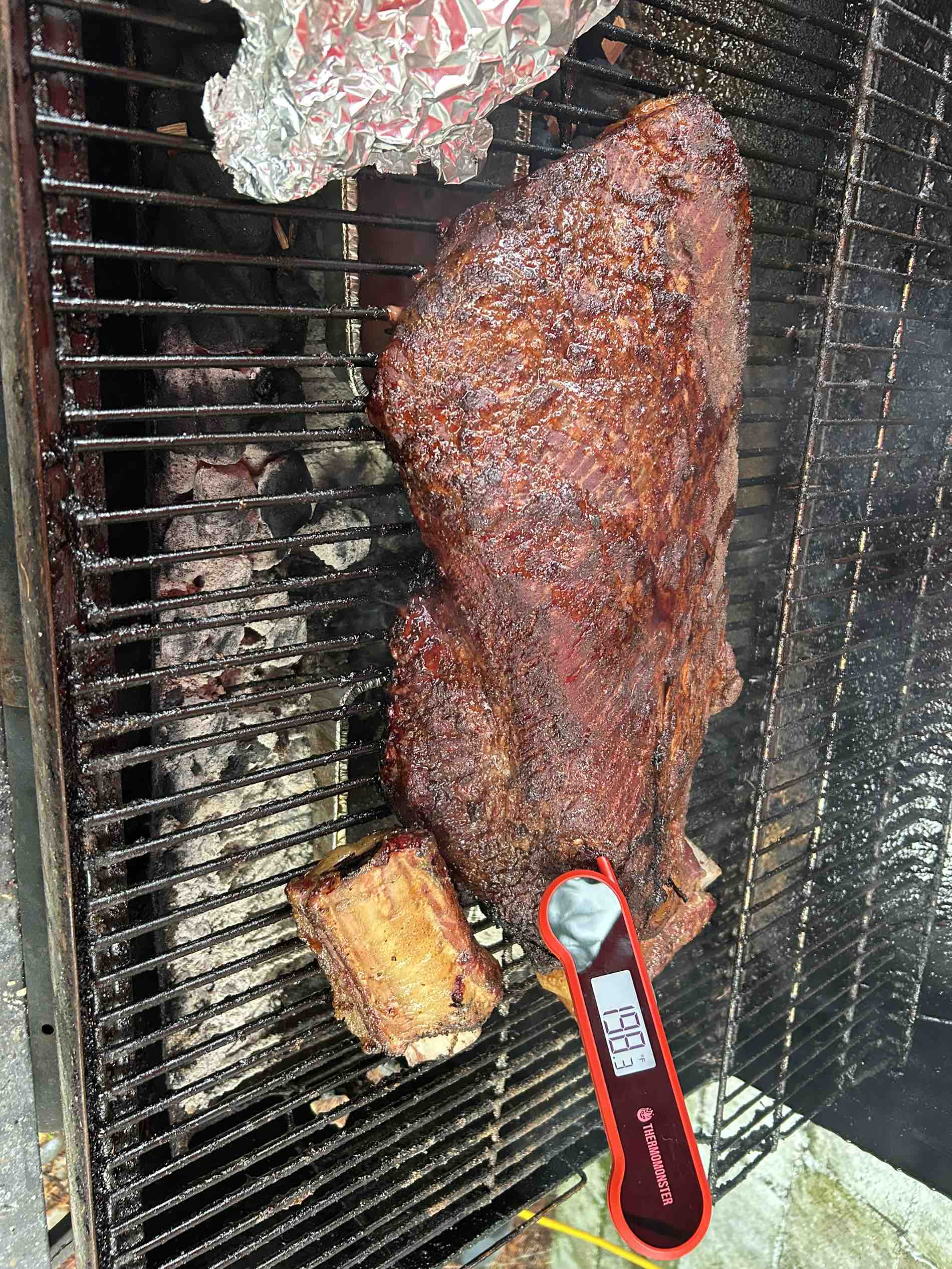
- Cook wrapped until internal temp reaches 195–205°F in the thickest part of the flat.
- Most important: Probe for tenderness — thermometer should slide in like soft butter with almost no resistance.
- Total cook time: ~1–1.5 hours per pound.
- Rest
- Leave wrapped (or double-wrap).
- Place in a dry cooler wrapped in towels.
- Rest minimum 1 hour, ideally 2–4 hours (it will stay hot for 5+ hours).
- Slice & Serve
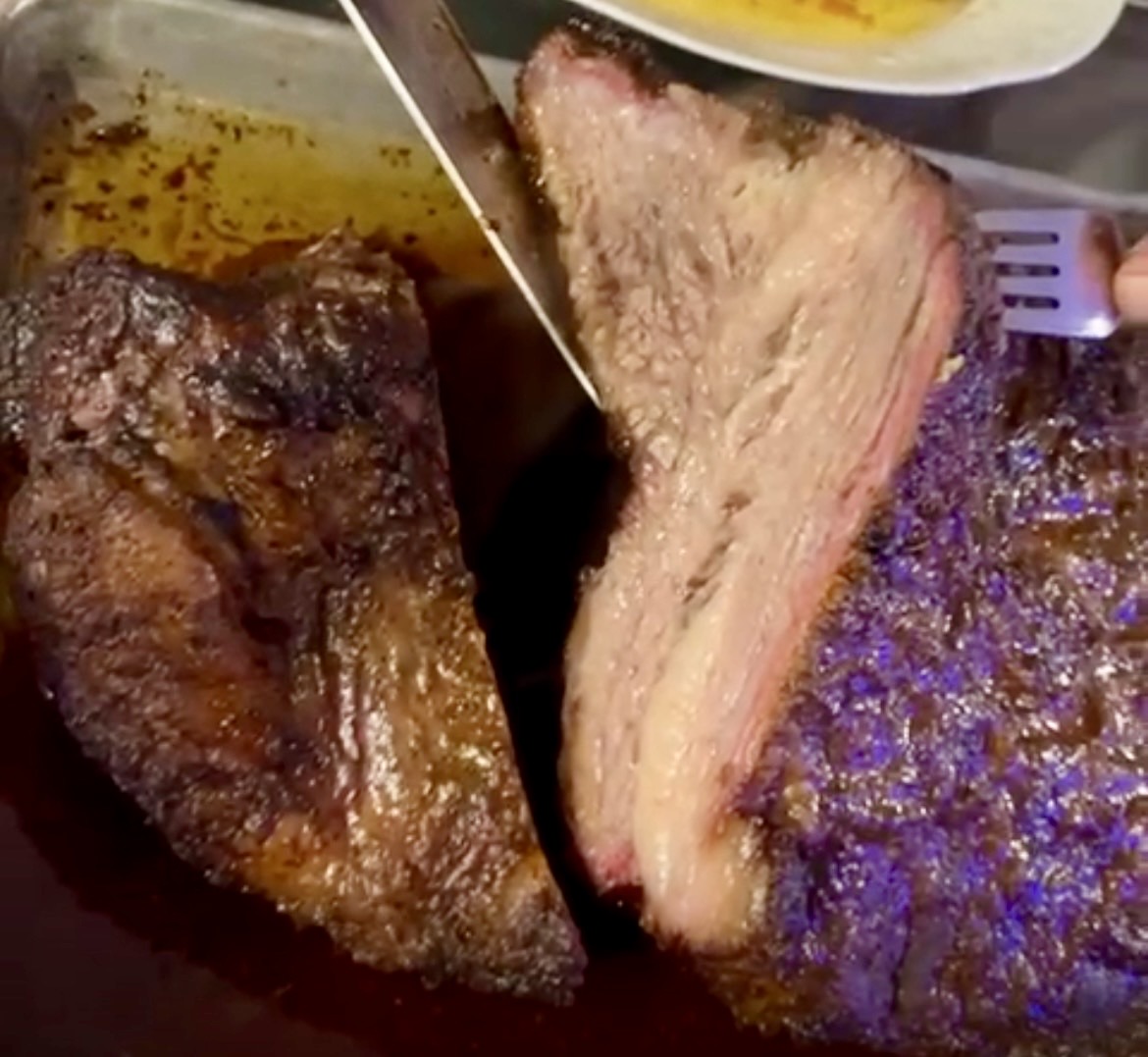
- Unwrap, separate point from flat if desired.
- Slice against the grain — flat one direction, point the other.
- Serve with burnt ends from the point if you cube and sauce them.
Tips for Success
- Monitor grate-level temp, not just lid thermometer.
- Thin blue smoke is ideal — white smoke means dirty fire.
- Using hot water in the pans helps stabilize temperature and keeps the environment moist for juicier results.
- If temp spikes, close vents. If too low, open slightly or add a few lit briquettes.
- This method gives competition-level bark and juiciness on a simple kettle.
Next day tip:
Toast some bread and make sandwiches with thin slices of cold brisket, topped with ioli mayonnaise or chimichurry.
Enjoy.
 Hernan Vivani's Blog